The Story
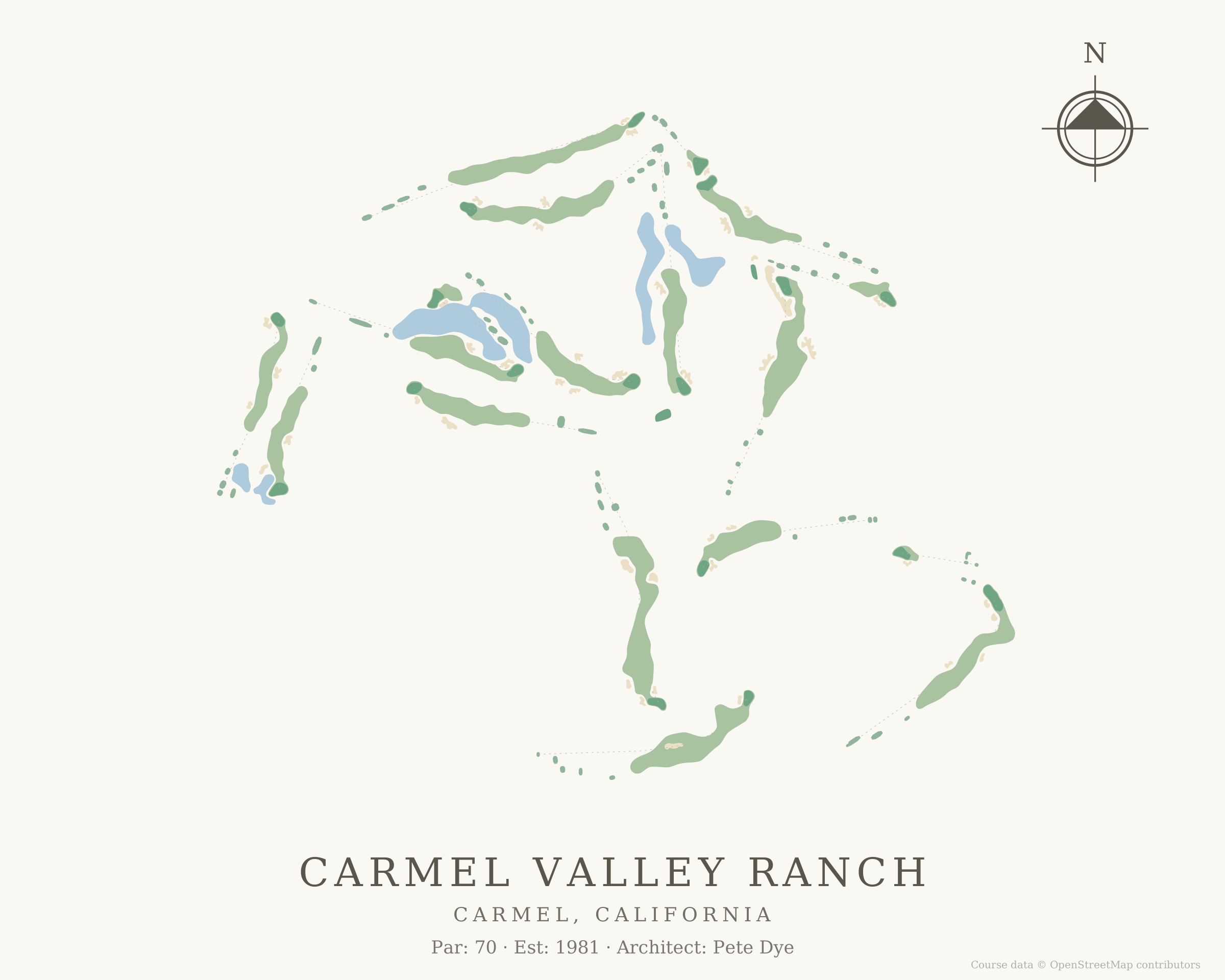
Everyone who loves Carmel knows the secret: when the fog sits on the coastline all summer, you drive ten minutes up the valley and find blue sky. That is where Carmel Valley Ranch was built — 500 acres of oak-studded foothills beneath the Santa Lucia Mountains — and in 1981 the resort handed its golf course to Pete Dye, the most inventive architect of his generation. It remains the only course Dye ever built on the Monterey Peninsula, a one-of-one from the man who gave golf Harbour Town, TPC Sawgrass, and Whistling Straits.
Dye's answer to the site was two courses in one. The front nine plays quietly along the Carmel River, tight and flat and full of his trademark trouble — small greens, angled hazards, fairways that ask for precision rather than muscle. Then the back nine climbs some 350 feet out of the valley floor into the hills, where the holes tumble through oak groves and canyons and the elevated tees look out over the whole valley. At barely 6,100 yards and a par of 70, it is proof of Dye's oldest argument: a course doesn't need length to make you think on every shot.
The course has been tended carefully since. A mid-2000s renovation led by architect Gene Bates refreshed the greens and tees while honoring Dye's original intent, and today the holes wind through the working landscape of the resort itself — vineyard rows, lavender fields, ponds, and old-growth oaks, with deer and wild turkeys wandering the fairways at dusk.
For golfers, Carmel Valley Ranch is the Monterey trip's warmest memory: the round you played in shirtsleeves while Pebble shivered in the fog, on the one course Pete Dye left in this corner of the golf world.