BEST DAY PRINTSCOURSE MAPS
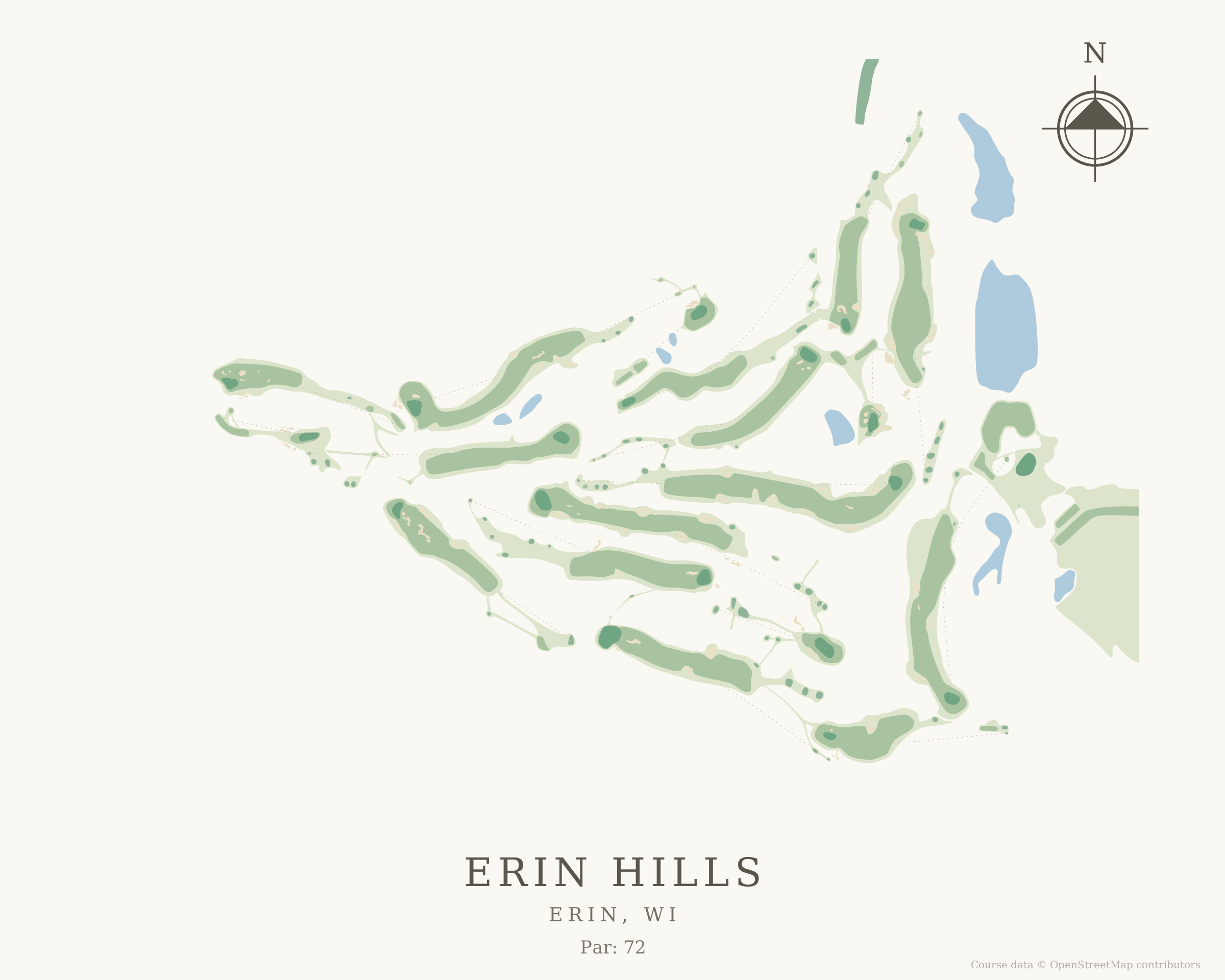
Erin Hills golf course map print

Traced from real course data — every bunker, green, and fairway. Course data © OpenStreetMap contributors.

Erin Hills

Six hundred fifty-two acres of glacial Wisconsin, walked the way golf began.

Erin, Wisconsin · Par 72 · Est. 2006 · Michael Hurdzan, Dana Fry & Ron Whitten

Four designs, one course — pick the one that fits your wall.

Played here on your best day?

Add your photo and your words — the course, your memory, one piece. Make it yours →

The Story

The land came first. Thirty-five miles northwest of Milwaukee, Ice Age glaciers left behind the Kettle Moraine — a heaved, tumbling landscape of ridges and hollows that looked, to anyone who had seen the linksland of Scotland or Ireland, uncannily like golf waiting to happen. In the early 2000s a Delafield greeting-card entrepreneur named Bob Lang bought the farmland in the town of Erin and set out to build not just a course but a U.S. Open site, handing the design to Michael Hurdzan, Dana Fry, and Ron Whitten — the last of whom was better known as Golf Digest's longtime architecture editor, here designing the kind of course he had spent a career writing about.

The trio's answer to the property was restraint. They moved remarkably little earth, letting fairways ride the glacial contours and framing everything in waving fescue. Erin Hills opened in 2006, and the USGA came calling almost immediately: the U.S. Amateur arrived in 2011, and in 2017 the course landed the U.S. Open itself — the first ever played in Wisconsin, and only the eighth on a course that anybody could simply call and play.

That Open week belonged to Brooks Koepka, who overpowered the big property to finish 16 under par — matching the U.S. Open's 72-hole record in relation to par — and claim the first of his majors. The USGA liked what it saw. The Mid-Amateur followed in 2022, the U.S. Women's Open in 2025, and a slate of future national championships is already promised to the town of Erin.

Through all of it, Erin Hills has held to one old-fashioned conviction: you walk. There are no cart paths carving up the moraine — just players and caddies moving across an enormous, wind-brushed landscape, with the spires of Holy Hill's basilica standing watch on the horizon. It is young by the standards of great courses, and it plays like it has been there since the glaciers left.

Championship Ground

U.S. Open2017The first U.S. Open ever played in Wisconsin, won at a record-tying 16 under par.
U.S. Women's Open2025Maja Stark held off Nelly Korda on the big moraine for her first major.
U.S. Amateur2011Kelly Kraft upset world No. 1 amateur Patrick Cantlay in the final.
U.S. Mid-Amateur2022Matthew McClean of Northern Ireland won the title — and a spot in the U.S. Open.

The Champions

Brooks Koepka
U.S. Open · 2017

Koepka's first major came here, a four-shot win at 16-under 272 that matched the U.S. Open's 72-hole record in relation to par. It launched one of the great major-championship runs of the modern era — four majors in his next eight starts.

Maja Stark
U.S. Women's Open · 2025

The 25-year-old Swede closed with a steady even-par 72 to win by two over Nelly Korda and Rio Takeda. Her first major title, earned on one of the biggest, windiest stages in the championship's rotation.

Kelly Kraft
U.S. Amateur · 2011

The SMU standout beat Patrick Cantlay — then the No. 1-ranked amateur in the world — 2 up in the final. His win put Erin Hills on the national map six years before the Open arrived.

Course Lore

Erin Hills is walking-only — no carts, ever. Every round is played on foot across 652 acres, most of them with a caddie.
One of its three designers, Ron Whitten, was Golf Digest's architecture editor — a critic who finally got to build the kind of course he'd spent decades judging.
The terrain wasn't shaped by bulldozers but by Ice Age glaciers: the course sits in Wisconsin's Kettle Moraine, and the architects moved famously little earth.
The 2017 U.S. Open was the first in history played in Wisconsin, and Brooks Koepka's 16-under total matched the championship's 72-hole scoring record.
The spires of the Basilica of Holy Hill rise on the horizon beyond the course — the signature backdrop of nearly every photo taken here.
From the tips the course can stretch beyond 7,700 yards, yet it remains fully public — anyone with a tee time can play the same ground Koepka conquered.