The Story
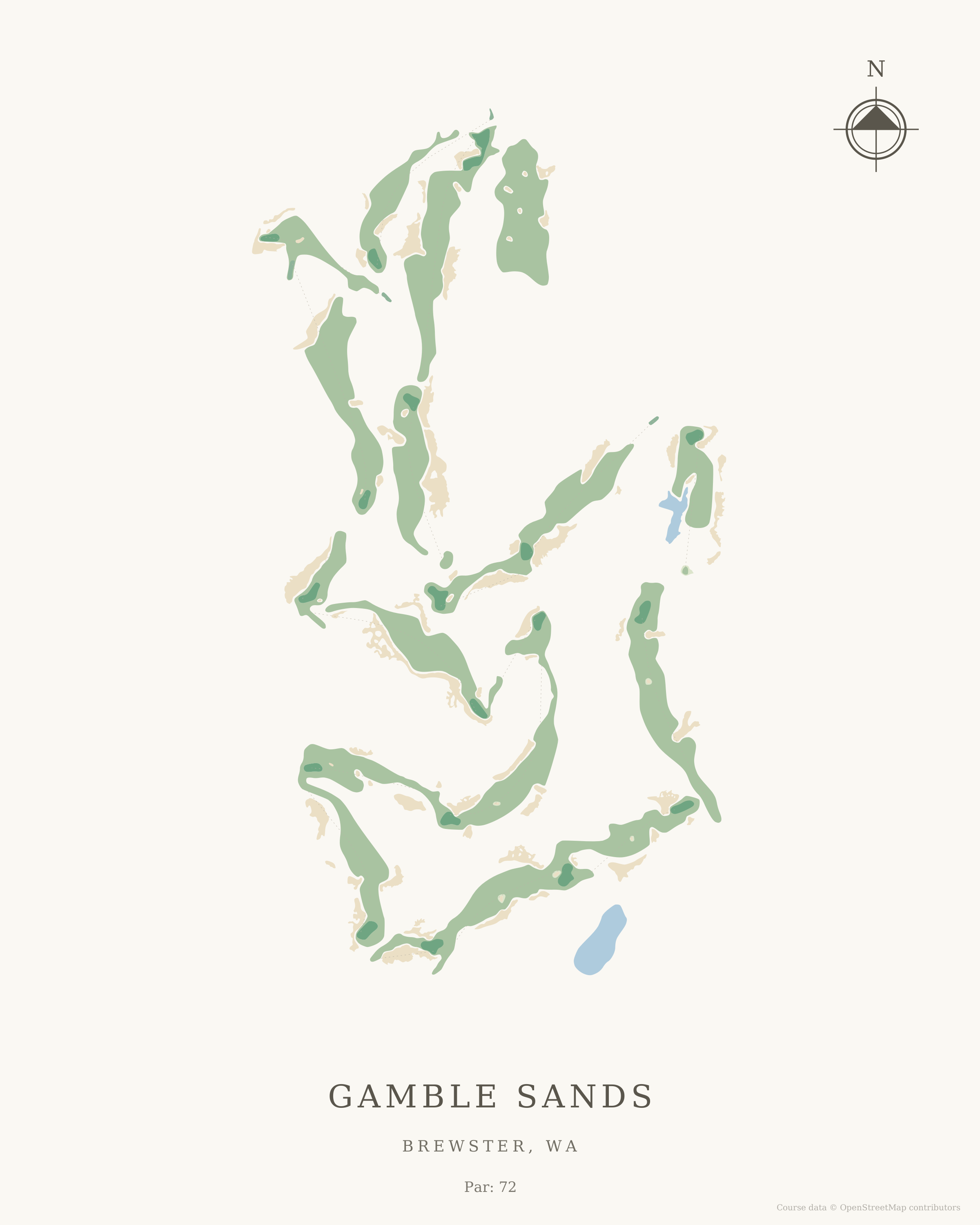
The Gebbers family has farmed the hills above Brewster, Washington for more than a century, growing into one of the largest apple and cherry operations in the world. The golf idea came before the course did: an early attempt on the property stalled when the recession hit in 2008, with only a few holes roughed in. When the family tried again, they hired David McLay Kidd — the Scot who had announced himself to America with the original course at Bandon Dunes — and pointed him at a treeless plateau of pure sand overlooking the Columbia River.
Kidd arrived at Gamble Sands in a reflective mood. His courses after Bandon had grown harder and bolder, and he had come to question it. Here he swung the pendulum all the way back: fairways as wide as runways, one enormous green after another, contours that gather a running ball toward the hole instead of shrugging it away, and almost no rough at all. The result opened in 2014 and was immediately named the best new course in America by both Golf Digest and GOLF Magazine.
What Gamble Sands proved is that fun is an architectural decision. From the back tees it stretches past 7,100 yards, yet the slope rating is famously gentle — a course where a twelve-handicap plays the round of their life and a scratch player still has to think. The high-desert setting does the rest: sagebrush, orchard country rolling to the horizon, the Cascades in the distance, and the big river shining below.
The sand kept giving. A 14-hole par-3 course, QuickSands, arrived in 2021, and in 2025 Kidd returned to open a second full eighteen, Scarecrow, on the cliffs nearby. But the original Sands course remains the reason golfers make the long drive into orchard country — and the reason so many of them turn around and book the trip again.