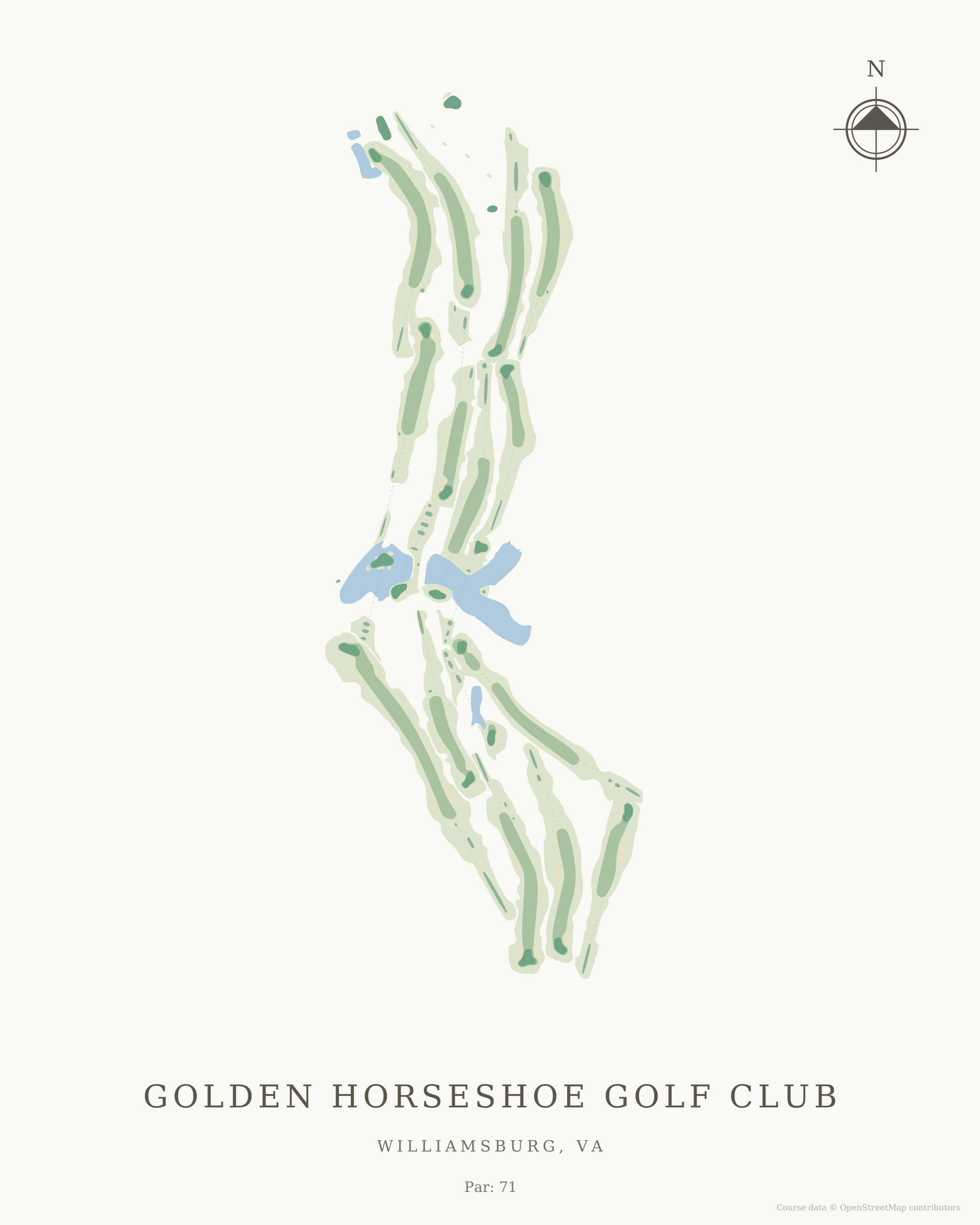
The Story
Golf came quietly to Colonial Williamsburg — a modest nine-hole course by the Williamsburg Inn in 1947 — but in 1963 it arrived for real. The Colonial Williamsburg Foundation gave Robert Trent Jones Sr., then the most famous golf architect alive, a valley of mature oaks and pines threaded with ravines and a spring-fed lake, just steps from the restored 18th-century Historic Area. The Gold Course he routed through it opened on September 11, 1963, and Jones never stopped bragging about it: he called it 'my finest design' and 'the equal of Augusta National.'
The name reaches back further than the golf. In 1716, colonial governor Alexander Spotswood led an expedition of gentlemen over the Blue Ridge to the edge of the known Virginia colony, and on their return gave each man a small golden horseshoe — the Knights of the Golden Horseshoe. The club wears that story proudly, and the course plays like an exploration of its own: no two holes parallel, water in play again and again, and at the par-3 16th, one of America's first island greens — Jones's original, decades before the form became famous elsewhere.
The proof of the design came fast. In September 1967, Jack Nicklaus played an exhibition here and shot a course-record 67, then declared it 'as fine a Trent Jones course as I've ever seen.' That professional record — just four under par — has stood ever since, which tells you everything about how the Gold defends itself. The course went on to host the 2007 NCAA Division I Men's Championship, where Stanford took the team title and USC freshman Jamie Lovemark closed 64-64 to win the individual crown.
The Golden Horseshoe became a family matter, too. Rees Jones, Robert's son, added the Green Course in 1991, making it one of the rare places in golf where father and son each signed an eighteen. And in 2017, Rees returned to restore his father's Gold — sharpening the original rather than rewriting it. To play here is to walk out of one restored piece of American history and straight into another.