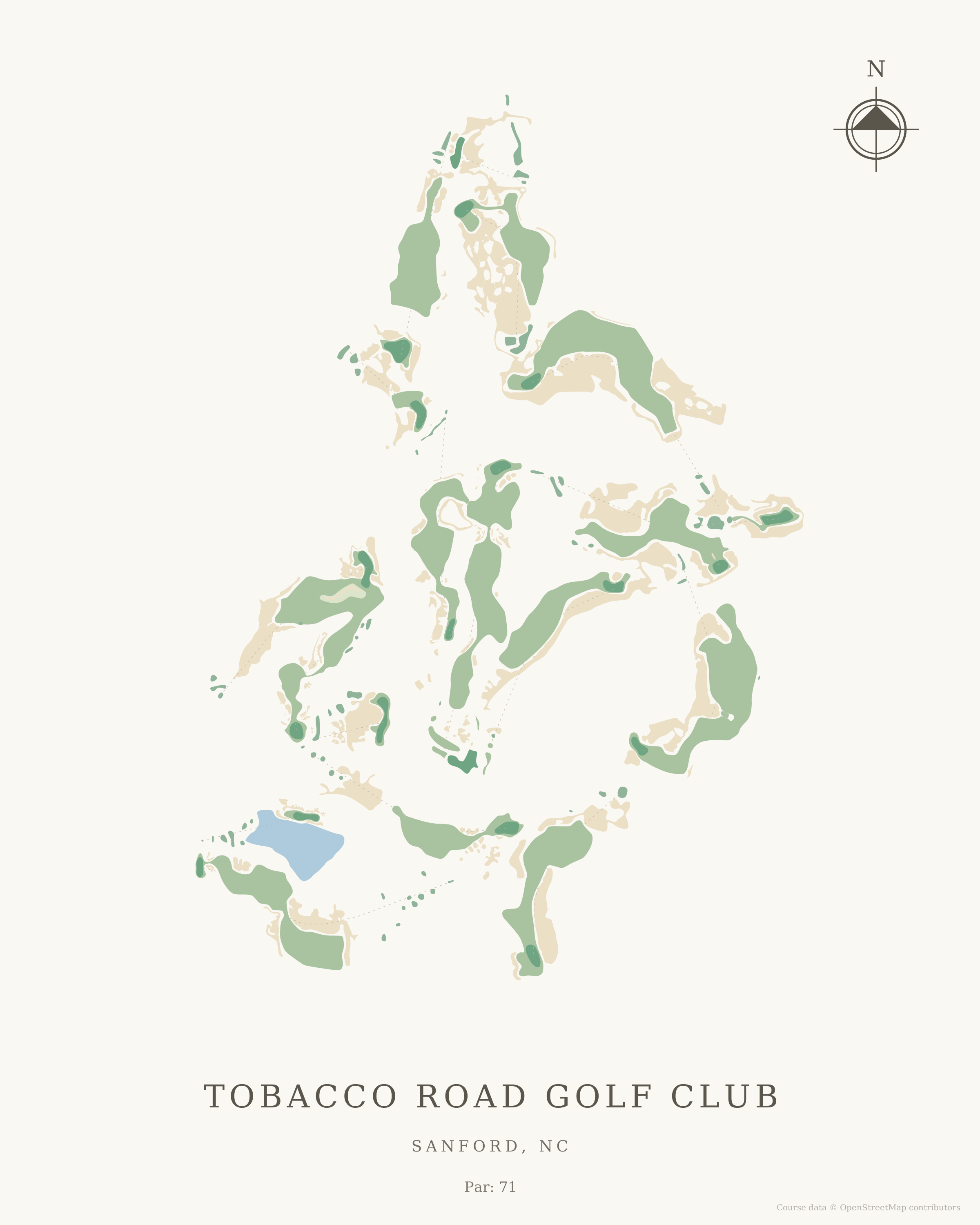
The Story
The land had already lived two hard lives before it became a golf course. Sandhills farmers grew tobacco on it; then the miners came, digging out sand for asphalt until the ground was a moonscape of pits and spoil heaps. When Mike Strantz first walked the exhausted quarry outside Sanford in the mid-1990s, he said he knew immediately it could be 'something not only spectacular, but also unique.' He was right on both counts.
Strantz was golf architecture's true maverick — a trained artist who had learned the craft on Tom Fazio's construction crews, then struck out on his own and named his firm Maverick Golf Design. He studied the Tobacco Road site the way he studied all his canvases: on horseback and on foot, sketching holes before shaping them. Where another architect would have softened the quarry's scars, Strantz exaggerated them — towering dunes crowding the first tee shot, blind shots over sandy chasms, greens folded like windblown dunes.
When Tobacco Road opened in 1998 — the same year Golf World named Strantz its Architect of the Year — nothing else in America looked like it. Early critics sneered about 'Mickey Mouse golf.' The sneering didn't last. The course climbed into the national rankings and became a pilgrimage: golfers driving hours out of their way between Pinehurst rounds to play the most polarizing, most photographed, most argued-about public course in the country.
Strantz died of cancer in 2005 at just fifty, leaving only nine courses behind — which is exactly why the ones he left matter so much. He called Tobacco Road 'simply the best project I've worked on.' Play it once and you'll spend the drive home replaying shots you've never faced anywhere else. That's the point.