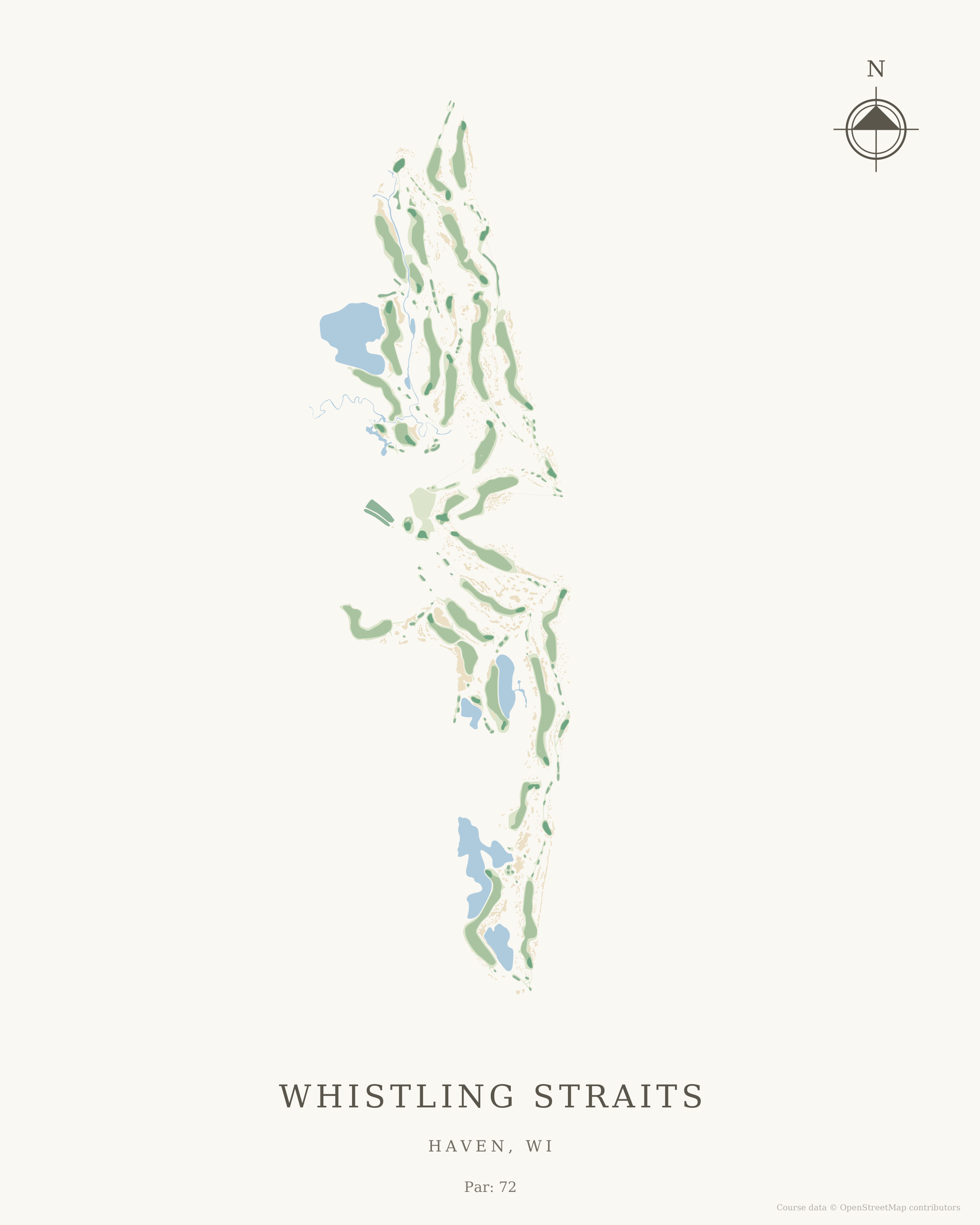
The Story
In the mid-1990s, Herb Kohler Jr. — the plumbing magnate who had already turned his company town into a golf destination at Blackwolf Run — walked a flat, abandoned military site called Camp Haven on the Lake Michigan shore and saw the coast of Ireland. He gave Pete Dye a simple, impossible brief: make it look as if the links had always been there. Dye answered with one of the great acts of earthmoving in golf history, hauling in thousands of truckloads of sand to sculpt dunes, bluffs, and hollows along two miles of shoreline.
The name came to Kohler on a walk during construction, a north gale whistling down the bluffs and whitecaps breaking on the rocky straits below. When the Straits course opened in 1998 the illusion was complete: fescue fairways, windswept dunes, a flock of Scottish blackface sheep wandering the property, and a caddie at your side — the Straits is walked, never ridden. Only the freshwater horizon gives away that this is Wisconsin.
Then the championships came, faster than for almost any course ever built. The PGA Championship arrived in 2004, barely six years after opening, and returned in 2010 and 2015 — three PGAs producing Vijay Singh, Martin Kaymer, and Jason Day, plus the most infamous bunker ruling in major history. The U.S. Senior Open came in 2007. And in 2021, Whistling Straits hosted the Ryder Cup, where an American team captained by Wisconsin's own Steve Stricker delivered a 19–9 rout, the largest margin of the modern era.
For the golfers who make the pilgrimage, the Straits is the closest thing America has to a links fever dream: a course where nobody can agree how many bunkers there are, the wind off the lake rewrites your plans hourly, and every hole ends with the water somewhere in view. You come off the 18th windburned and grinning, already telling the story.